Showing posts with label stone age language. Show all posts

Monday, 16 December 2019

Mystery of the Stone Thumbs - Figure Stones

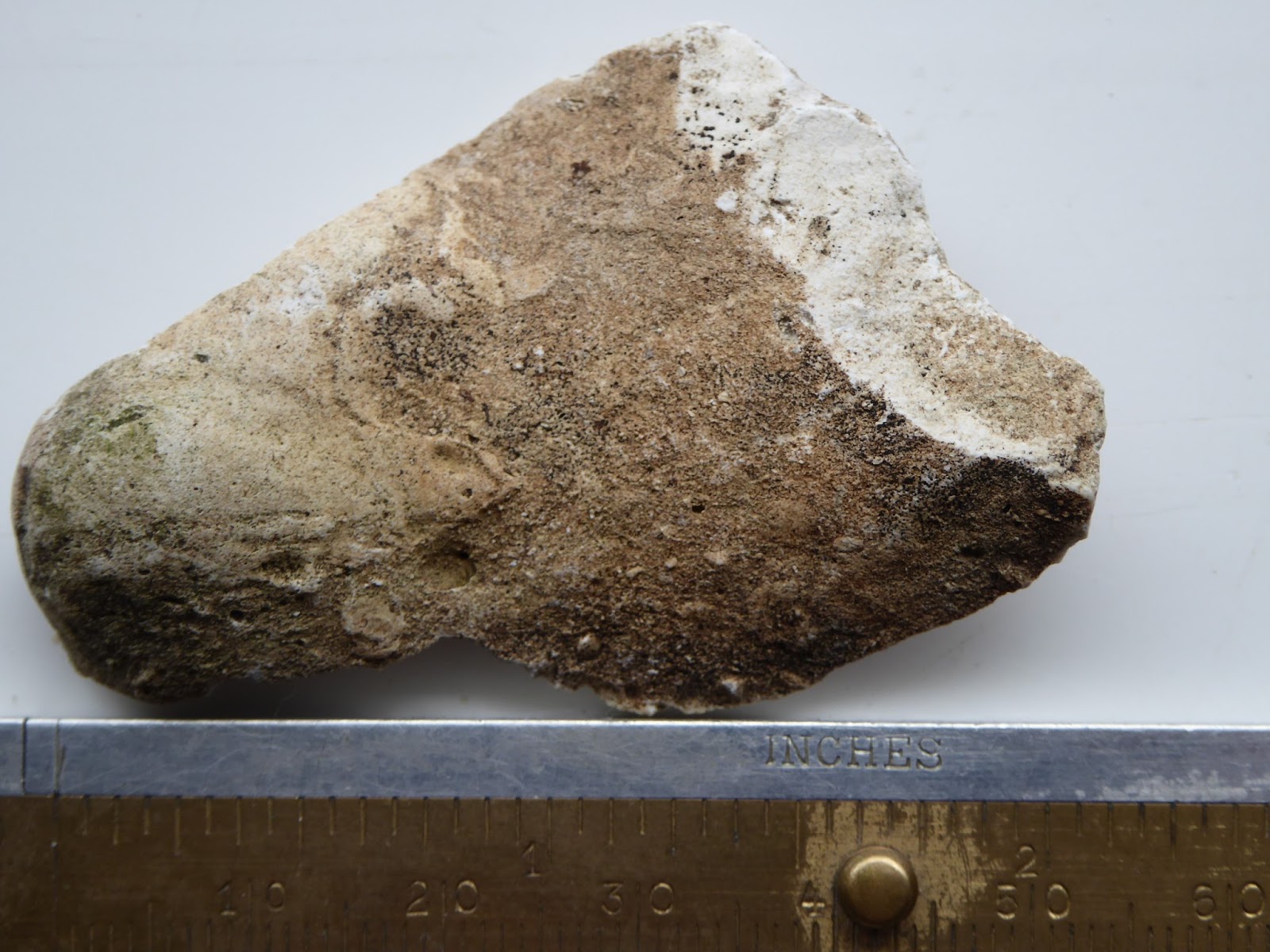
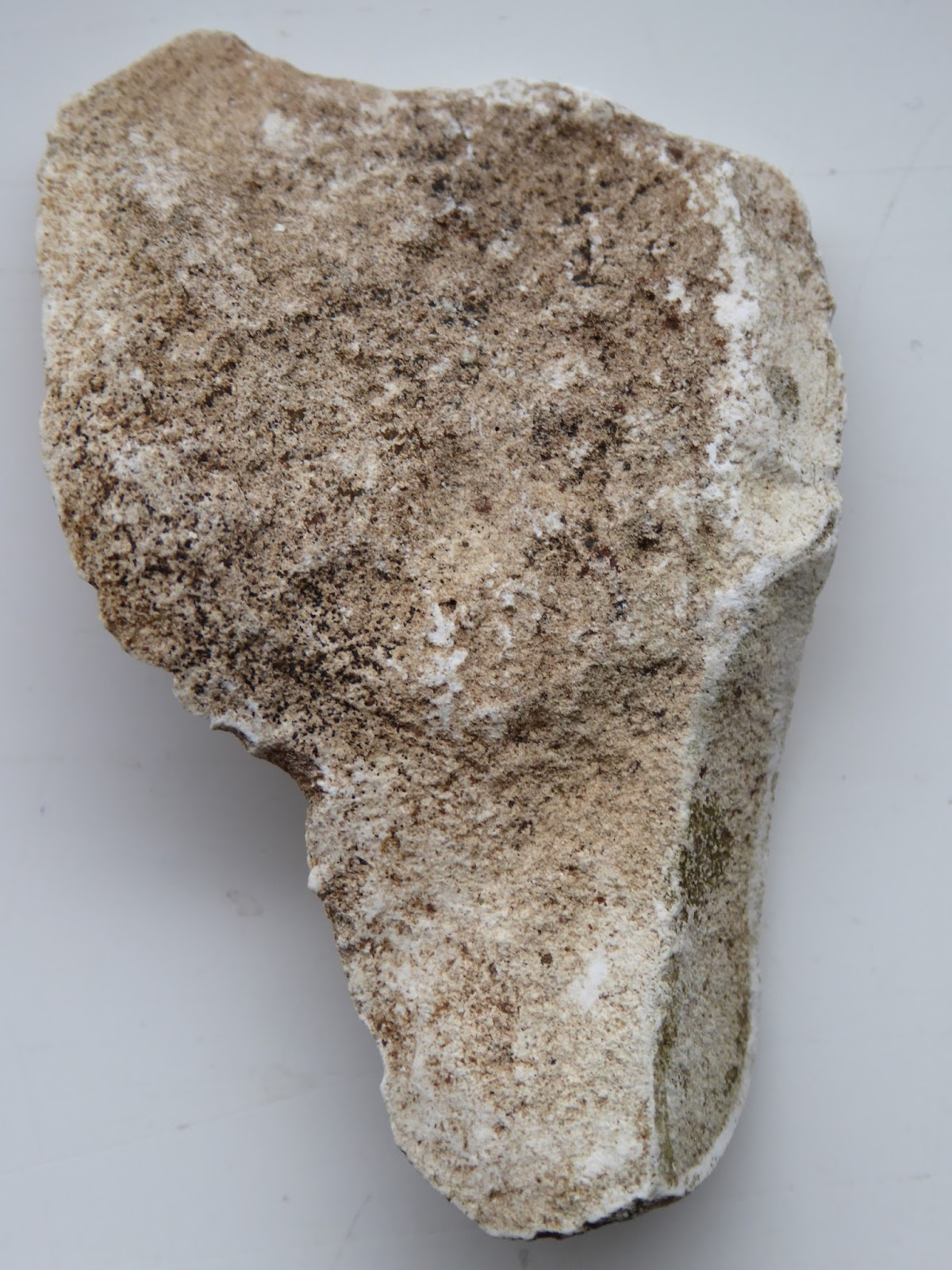
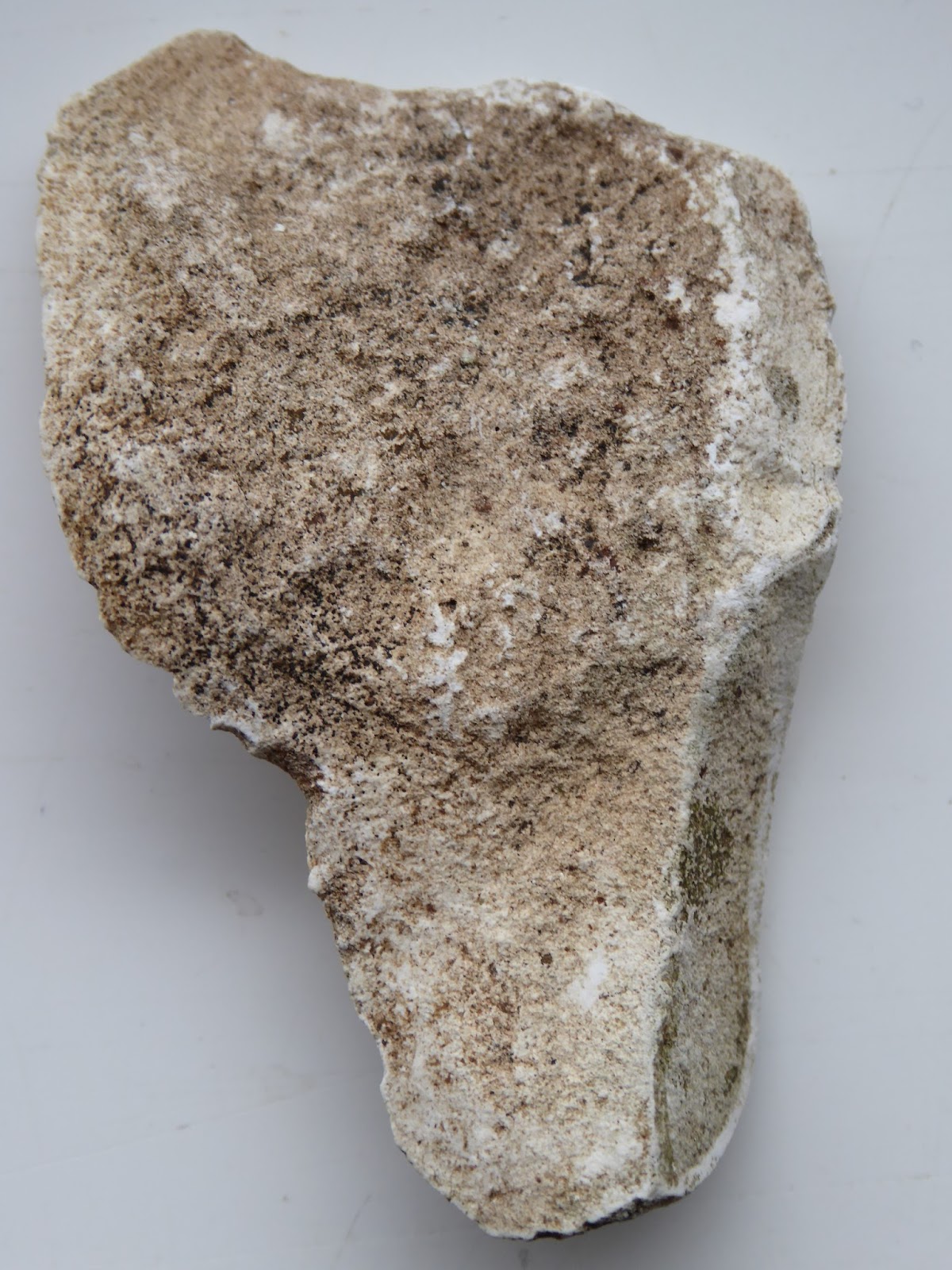
Thumb and finger shaped stones are found all over the world, a few of them have even been labeled as fossils by their finders, which in the case of flint finds would shed doubt on mainstream geology theory and evolutionary theory timelines, if they were indeed fossils. Even one of my own finds appears to be an only lightly modified flint nodule resembling a thumb shape, but I don't actually believe it to be a fossilized thumb, just a case of very fine cortex carving, as seen often in my flint finds. I made this video to demonstrate the quintessential figure stone thumb motif, showing some of my best thumb shapes, some very subtle ones, an unquestionable flint tool bearing the same symbology at its tip, and even one or two that appear almost photo realistic. By in large these thumb shapes do not appear to be modeled on the thumbs of homo sapiens, but perhaps close cousins?

The video quality is not the best, however it still demonstrates the very distinctive thumb shape, how it was incorporated into flint blade tools, and finds that show no piecing or cutting properties. Most were found on my site here in the UK, many incorporate blades.

Figure stone, portable rock art

Figure stone, portable rock art

Thursday, 27 June 2019

Flint axe shows Hadrosaurus - Figure Stones

An almost photo-realistic image of a Hadrosaurus face can be seen in this flint axe find, although we don't have any actual photos of a real Hadrosaurus to compare it with. This is as good as it gets, in fact one could argue it has a better 'feel' than any modern reconstruction as it was apparently made by people who witnessed the beast first hand, although recognition would also be testament to the quality work of artists who reconstruct dinosaur images from fossils.


So what of the naysayers? can they find a photo realistic image of a VW Beetle or a tin opener in other prehistoric flint tools? No they cannot because chaos is not responsible for the image, human workmanship is.  Just like we recognize pictures in items such as books, this is clearly a flint tool and was in the hands and worked by prehistoric humans,  the flake removal also goes beyond simple utilitarian shape creation.


Above: To those who know and understand paleolithic symbology, this flint axe also triggers the recognition of the bird motif.

So is this a prehistoric artistic impression of what a Hadrosaurus face actually looked like? well it actually matches quite a few known dinosaur likenesses, but Hadrosaurus seems to be the closest match, and I have other finds that would corroborate this interpretation.

This figure stone also holds other prehistoric symbology previously recognized in my finds, although one motif I have seen repeatedly, I'm not sure what creature it represents far past the loose interpretation of marine mammal.

Above: Another find from my site, could this be a rather simple description of another dinosaur head? crude 'teeth' can be seen.

Above: This is a fossil tooth, also from my site. Current geology theory would date this tooth to at least 70 Million years old.

Above: For those who are still stuck thinking that Dinosaurs and Humans would never have met, here is a video that demonstrates there is  a huge amount of evidence to the contrary.
Please note the original video has been deleted, so a replacement video has been found.

Wednesday, 20 December 2017

Portable Rock Art - Foot Prints?

 This foot print shaped flint find is in a similar style to these two flint artworks also from my find site. These thin flake sculptures show possible signs of painting (the white areas) and are quite small, this one being just over 2.5 inches toe tip to heel.


Figuratively foot, leg and boot like descriptions can be found in figure stone or portable rock art pieces, see the post Portable Rock Art - Flogging a Dead Horse?  many of the head profile descriptions can be flipped over to describe a foot or boot. This foot print shape also adds more evidence that ordinary humans were responsible for these artworks.  

Friday, 27 October 2017

Dinosouar Depictions in Figure stones - Eoliths

Do some figure stones show deliberate depictions of dinosaurs? Actually there is no reason why not. Ive already shown how sculptured flint artifacts can be recovered from cretaceous layers and I have given simple instructions on how you can easily find your own in gravel deposits, that are millions of years old. Some other portable rock art proponents may well mock at the suggestion of intended dinosaur impressions, but the fact of the matter is that dinosaur interpretations are no different from any other interpretations of suspected figure stone finds.
The head profile of a 'protoceratops' facing left?

Another 'protoceratops' head profile facing right?

This next two images are from a find by Brian Troy of New York, USA. Some of Brian's finds exactly match the topology of my finds here in the UK.
 A 'protoceratops' front half facing left? The front half convention is common in figure stone finds. (frills can be seen on the collar)

An ape like face frontal can be seen in shadow to the left of the stone.

Thursday, 2 March 2017

Is Sinai 361 a Figure Stone?

Sinai 361 is one of a collection of  stone tablet's, reportedly showing the first ever alphabet. Written in ancient Hebrew and derived from Egyptian Hieroglyphs the 22 letter alphabet is apparently the worlds first. The inscriptions on Sinai 361 have been translated by Dr. Petrovich as:

'Our bound servitude had lingered. Moses then provoked astonishment. It is a year of astonishment, because of the Lady.'

But could the script be written on a Figure Stone?  it certainly looks that way to me, check the right of the picture below, and a simple face profile can be seen, furthermore two more 'combined features' ape like faces can be seen front on, below the face profiles 'eye' feature, this is a stacked face configuration, detailed numerous times on this blog.  The bottom left also matches ape like face profiles seen in my own figurative examples. No doubt more could be seen with better photos and more angles of this piece.


If this is a Figure Stone, and then later inscribed with the first ever alphabet, derived from Egyptian Hieroglyphs, what a bizarre piece showing the evolution of visual communication.

Further Reading : Daily Mail

Thursday, 16 February 2017

Figure Stones - Simple Genus

The last post here on Eoliths was a highly complex piece of stone art, showing numerous face profiles, at least 5 bears, many hominids, many complete apes, more than one half canine, even half a tortoise and the good old elephant front leg glyph can be seen, I will compile a list at some point and share via my Google Plus.

This post is about the simple figure stone's or portable rock art finds, and how the proto language evolved into a much simpler form, well at least there is evidence that something in the prehistoric 'evolved', even if it was only communication.

 The next five pictures below are of the same flint find from my usual hunting grounds, there is just enough detail in the piece to make up nearly all of the most common glyphs, and even if details were missing, the outline may suffice to be of use to someone who was well aware of the communication technique.

Above: A simple bear head glyph facing right.

 Above: Another bear glyph right, and a horse head glyph facing left, note the white flint representing the mane and darkened muzzle area. 

 Above: The good old elephant and front leg motif, note how turning the stone 1/4 counter clockwise a simplified thumb motif can be seen pointing right.

Above: An ape face motif to the left, and a bird motif to the right. You may also notice a face likeness in the center of the stone.

 The YouTube video below shows a collection of some of those Indian Effigy Stones, these could all have been used in a very similar way, very briefly at 4:37 you will see the stone has a chip for a 'thumb nail' and is very thumb shaped. I am not of the opinion that Indians from there supposed occupational time line made these items, although that does not mean that Indians of a much earlier date didn't. If you are unaware of my views on the thumb motif refer to this post (Portable Rock Art - Rule of Thumb) I have added a picture or two since originally posting.

The Video above is provided by William Shira.

Thursday, 15 December 2016

Rule of Thumb - Portable Rock Art Motif


Something I have been aware of for a few years is the Thumb motif found on my site and in other hand axes and blade tools. I have already shown a number of hand shapes in my poly iconic materials and perhaps there is a similar meaning to these icons. I have long suggested that these motifs are actually visual language devices rather than art per se. I have found many suspected thumb shapes from my find site and have seen others, both recognized and unrecognized both in flint tool form or just as worked stones. So what is the meaning of this motif? Many portable rock art finds contain images of hominids and apes, usually in head profile form, and there is a great variety of both, all of these motifs can be replaced by the thumb motif. So instead of carving various ape and hominid head profiles, prehistoric men could of carved a thumb shape to indicate all, allow me to explain a little further. One of the unique features of hominids is opposable thumbs, so this motif would cover all hominids. On a double sided piece direction of travel could be easily indicated, furthermore when the piece is turned upside down this could indicate all apes and monkeys, as the thumb would be in the position it is on monkeys hands rather than the natural position it is in on the hands of humans and hominids.
This is a Flint hand Axe found in Kent Uk, a thumb shape and nail can be seen. Source: www.stoneagetools.co.uk 

Below: A selection of 3 thumb shapes found from my find site, The top one is also a blade tool.


Below another one of my UK thumb finds.
 

The Two Flint tool finds below were both found in North America and Both show the Thumb Motif.

Picture Lost somehow? empty space deleted 13/10/2021

From Ebay, another combination elephant half and thumb motif.

Below: From my find site here in the UK, another combination thumb and elephant front leg motif.

Below: The images to the left are drawings of an eolith, recovered from layers dated to at least 2 million years old. Again elephant half and combined thumb motifs can be seen.


Is this neolithic? polished hand axe carrying comparatively modern traces of figurative art?
Image source: The British Museum, link has further details about the find.

USA stone below: The bottom picture also shows the Elephant and front leg motif, thumb shape and claw.