Showing posts with label geofacts. Show all posts

Sunday, 14 September 2025

Eoliths: Ancient Flint Tools from Tertiary Layers


Eolith Collection, Flint Tools, Ancient Artifacts

Eoliths: Ancient Flint Tools from Tertiary Layers

Eoliths are flint or stone artifacts found in very ancient (Tertiary) geological layers. Originally accepted as flint tools but nowadays often wrongfully dismissed as “geofacts” or naturally broken stones, many exhibit clear signs of deliberate flaking. This page explains what eoliths are, why the term itself is problematic, and how new evidence challenges old assumptions.

Definition

The term “Eolith” combines the Greek “Eos” (dawn) and “Lithos” (stone). In the late 19th century, it described crude tools found in layers far older than accepted human presence. They were labelled “geofacts” without proof, largely because their age seemed impossible, not because they lacked workmanship.

Key Characteristics

  • Found in Tertiary strata (Miocene 23.03–5.3 MYA; Pliocene 5.3–2.58 MYA).
  • Often show bulbs of percussion, striking platforms, and patterned removals.
  • Exhibit patina depth consistent with extreme age.
  • Can have figurative content—head/animal profiles and faces (see Figure Stones).

Eoliths vs Geofacts

Geofact: An unworked stone resembling a tool but formed naturally.
Eolith: A stone found in very old layers, often labelled “unworked” due to its age—yet many show human workmanship and evidence of cognition. This label mismatch leads to dismissal of potential early human activity.

Why This Matters

Recognizing eoliths as deliberate tools reshapes our understanding of human antiquity, cognitive development, and migration timelines. Scientific dating, patina analysis, and lithic comparison are crucial to revisiting these finds objectively.

FAQ

  • Are eoliths real?
    Yes. Assemblages show repeated flaking patterns, typology, and patina that strongly indicate human workmanship. Recent finds in Europe point toward dates extending into the Tertiary layers, making it unscientific to dismiss them as “geofacts” without proof.

  • How old are eoliths?
    They are often associated with the Pliocene and Miocene epochs—millions of years before mainstream models allow for tool-making humans. Some appear alongside Tertiary fossils, suggesting deep antiquity beyond the Lower Palaeolithic.

  • How can eoliths be distinguished from geofacts?
    Unlike natural fractures, eoliths display repeated flake removals, consistent striking angles, and edge wear. Repeating tool types (hatchets, scrapers, handaxes) across large assemblages strengthen their authenticity.

  • Where have eoliths been found?
    Across Europe (notably the UK, France, Belgium, Spain) as well as Africa and Asia—often in river gravels, chalk layers, and terraces dating back several million years.

  • Why are eoliths controversial?
    They challenge mainstream timelines by suggesting tool-making occurred millions of years earlier than accepted. Many archaeologists dismiss them as broken stones rather than address the evidence of deliberate workmanship.

  • What do eoliths tell us about human origins?
    If genuine tools, eoliths imply cognition and technology arose far earlier than currently believed, forcing a rethink of human evolution and suggesting tool-making in the Tertiary.

  • Are eoliths crude?
    Not necessarily. While some crude examples exist, many are finely worked and indistinguishable from accepted Palaeolithic tools, showing deliberate shaping and skill.

Wednesday, 16 December 2015

Archaeologist's Still Ignorant of Important Lithic Discoveries.

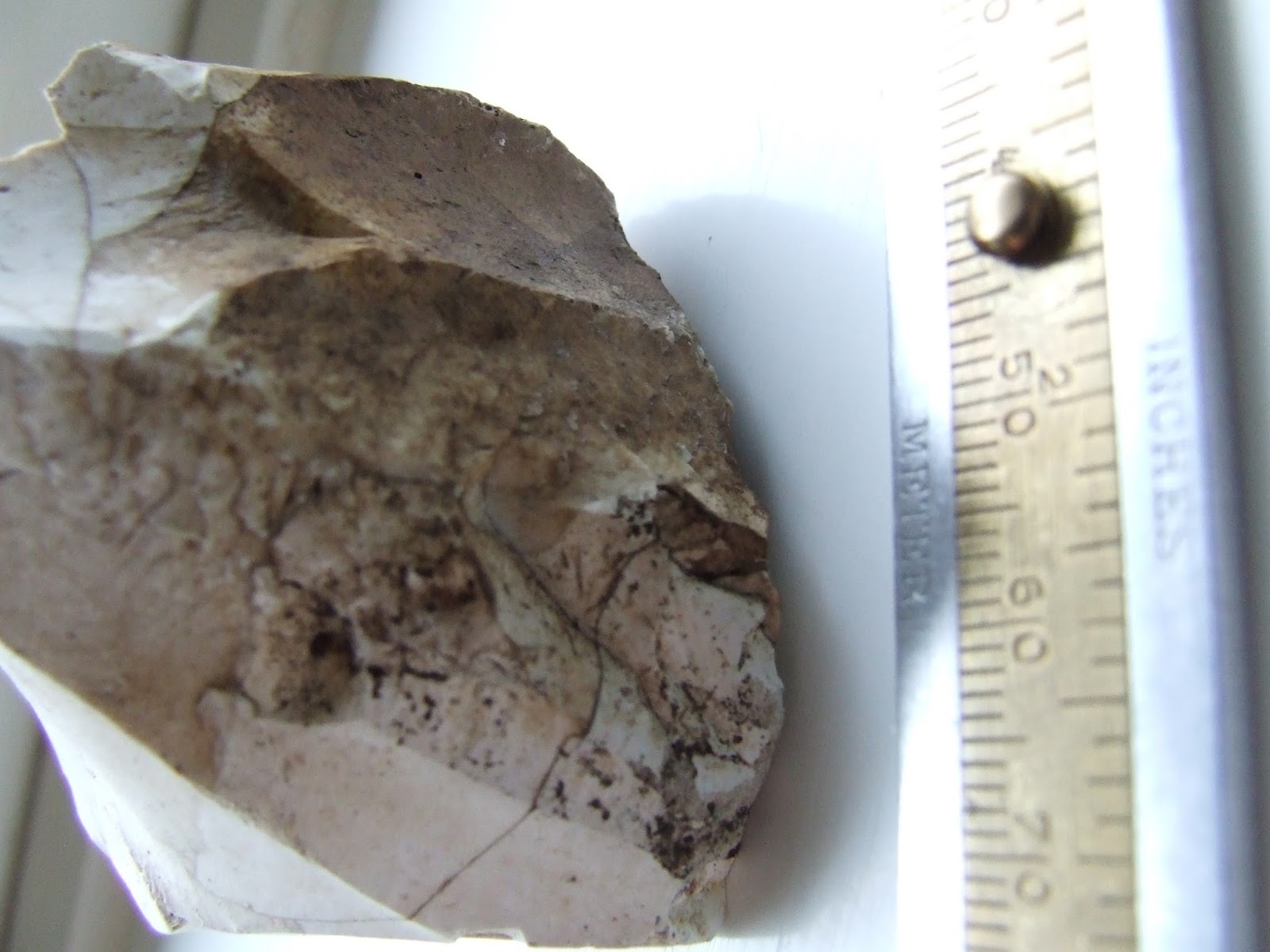
I have a huge collection from my site, thousands in-fact, and mostly with a common topology, That of Bear, Elephant, Ape and Feline head profiles. All of the pieces contain numerous face descriptions, and although a few are Geofacts, by far the majority can be easily recognized as sculptured by our predecessors. I have many standard blade and cutting tools from my site,  these also contain animal images. My find spot is close to a world famous site of important Archaeological discoveries, finds dating back 400,000 Years. Over the years I have contacted many professionals in the field wishing to share my finds and the location, so that a more in depth investigation can be carried out, but alas, no such correspondence has been received.

flint figure stone
Above: The common elephant and front leg motif,  bear head profile also looks downwards.

Above: A feline like head profile faces right.

More face profiles can be seen in these two animations.


Above: another elephant and front leg motif  can be seen, along with a human skull likeness, and the front half of a horse, grazing. From Revelation in Stone.


Wednesday, 21 August 2013

Natural Selection

It is worth mentioning selectiveness when looking for prehistoric artifacts, what we perceive to be an artifact, why we pick up certain stones, and why we discount others. We should not be so fast to throw stones with possible modification over our shoulders, just because they don't fit a preconceived idea of what a #prehistoric artifact should look like. Likewise we should not discount stones that show little or no modification.
It is actually bad practice, to pick up any suspected artifact without first considering responsibility for its recording, and note in memorable history. When we take stones home with us we are indeed taking something possibly quite significant away from the site and our understanding of it as a whole. This is not always the case, surface finds and unstratified materials can give us clues about new sites, but only if people get to know about the finds themselves and where they were found.
That said, if everyone left the stones in the field, nobody would learn much of anything about these stones, and the culture, or prehistoric landscape they come from.
It is also worth noting the vast veriety in #lithic implements, and the fact that you should not be selective in noting what items your site provides. This is important, so artifacts are best seen as a complete collection, across every suspected relevant item, not just those perfect hand axes, but the other things that can be found repeatedly at the site of #archeological interest. This will give a broader view of any suspected relevant #culture attached with the finds.
The photos below are some finds from my site, these were found alongside some of my more obvious artifacts. These stones are entirely natural in form or appear to have very little obvious modification, if any.
The spherical objects I presume have been collected by peoples in the prehistoric era, no doubt there are many sugestable uses for such things. The objects formed naturally underground and were obviously prized when found, if indeed linkable to the culture concerning the creation of some of the more complex #polymorphic #art. It is really without saying, that the presence of these almost perfect ball shape stones, in concentration at my site, is indicative of the presence of some kind of historical/prehistorical culture.
The other stones I also believed to hold some significance, natural #elephant head and #seal shapes in stone found next to more obviously worked atifacts holding the same set of suspected #symbology.