Showing posts with label Australopithecus. Show all posts

Sunday, 17 December 2023

Eolith Discovery in Southern England Reveals Australopithecus Sculpture

Introduction: In the heart of Southern England, a groundbreaking eolith discovery is challenging the mainstream understanding of prehistoric art and human history. This extraordinary find features a striking frontal sculpture that uncannily resembles an Australopithecus, offering a new perspective on early human creativity. 


A Glimpse into the Past:
Unearthed from a site rich in historical artefacts, this eolith stands out for its remarkable symmetry and detailed craftsmanship. The sculpture presents a face with deep-set eyes, possibly depicting a winking expression or even a hooded figure. This interpretation is further enhanced by the head shape, which aligns closely with our knowledge of Australopithecus anatomy.  

Artistic Mastery in Stone: The craftsmanship of this eolith is nothing short of stunning. Its symmetrical design and the intricate detailing of the facial features suggest a level of artistic skill not commonly attributed to early human artists. The deep holes for eyes, in particular, add a level of depth and realism that is rarely seen in prehistoric artefacts. 


A Tapestry of Faces and Symbols:
Beyond the prominent Australopithecus representation, this eolith is a treasure trove of other faces and symbols commonly found in flint tools and art objects from the region. Each marking and figure on the stone tells a story, offering insights into the cultural and artistic expressions of our ancestors and as my study suggests a kind of world wide prehistoric proto-language, or just a silent hunting aid. 

Implications for Prehistoric Art Studies: This discovery is not just a testament to the artistic abilities of early humans but also a potential paradigm shift in how we understand prehistoric art. The sophistication and clarity of the sculpture challenge the notion that early human art was rudimentary or purely functional.  

 The above photo taken from another angle of the prehistoric sculpture is reminiscent of a bear face description, although it is in fact a complex mash-up of ancient symbolism. Those more familiar with my research may notice the ambiguous optical illusion of a left and downward facing hominid head profile and a right facing bear front half. 


Conclusion: The discovery of this eolith in Southern England is a remarkable addition to the world of archaeology and prehistoric art studies. It compels us to reconsider our perceptions of early human artistry and opens up new avenues for research and exploration in human history. 

Call to Action: Stay tuned for more updates on this extraordinary find and join us in exploring the depths of human history and creativity. Share this post to spread awareness of this incredible discovery!

Another face in the sculpture displays a rather simple chimp impression.

Monday, 5 March 2018

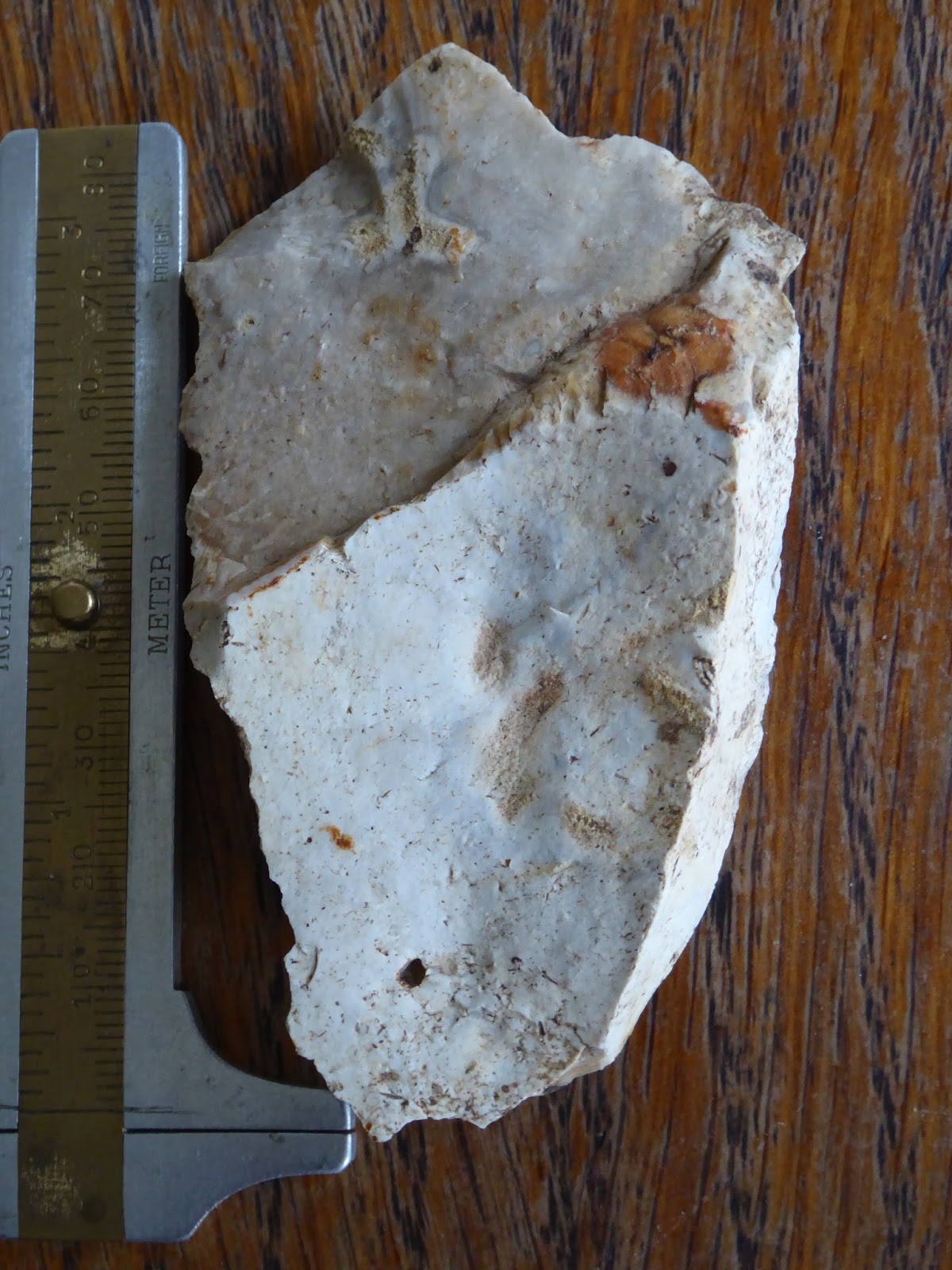
Prehistoric Artwork of Ancient Faces - Figure Stone

This was just a chance find but none the less an interesting figure stone and fine prehistoric artwork. Some very interesting face images can be seen with supporting details. Images appear to be of sub human, ape or hybrid forms. One face which only appears very briefly is actually of a well known and documented motif.


Thursday, 8 February 2018

Prehistoric Micro Artwork Holds Superb Ape Images.

 Another prehistoric flint artwork find from my usual hunting grounds showing some stunning imagery, but this sculpture is only about one and a half inches across its longest dimensions, possibly suggesting that  very small people made and used it.  Study the three animations very carefully.


Wednesday, 11 October 2017

Australopithecus Prehistoric Artworks - Figure Stones

The Australopithecus genus was believed to have evolved some 4MYA in Africa. Here are some sculptured flint artworks that may show images of  Australopithecus or other similar ape hybrid forms. This motif characterized by a heavy brow ridge and hump toward the back of the 'head' can be found in many places worldwide including North America. As is the norm, all of these finds are from my site in Southern England and all show other motifs that fit the common lexicon. If the motif does in fact show images of Australopithecus then the assumption that they evolved in Africa some 4MYA is false, and they wondered the Earth at least 65 million years ago. This motif can be seen in many of my finds and in numerous pictures on this blog.

 Both of the above images are of the same flint figure stone, the above still shows a black mark as an 'eye' probably birch tar, both 'eye' features are dotted with the same tar like substances. More 'tar' can be seen to the right of the still image.

 This image from the previous post also shows the same motif facing leftward.

 Again the same motif can be seen leftward.

 The elephant head motif can be seen, the large leached ochre spot representing the eye feature.

 This image is of the same stone shown in the previous two images, it is a thin flint blade tool and is shown in a free standing position.


The same motif, but can you see the whole elephant shape and dino head shape?

The above find was recovered from over a meter down in stratified cretaceous chalk layers, again we can see the same motif facing left. Video of the recovery of this find can be seen in this post here.

Sunday, 30 October 2016

Cretaceous Portable Rock Art Find Recovery.

The Cretaceous period runs from 66 to 145 Million years ago, or there about, it gets its name from the German word for chalk. A friend filmed me finding and recovering an artifact embedded in a cretaceous layer, so I thought I would share it. You may notice a strong resemblance to a motif found in an earlier find, the same heavy set brow ridge and bump on the back of the 'head' as in this piece, showing a suspected Australopithecus.